
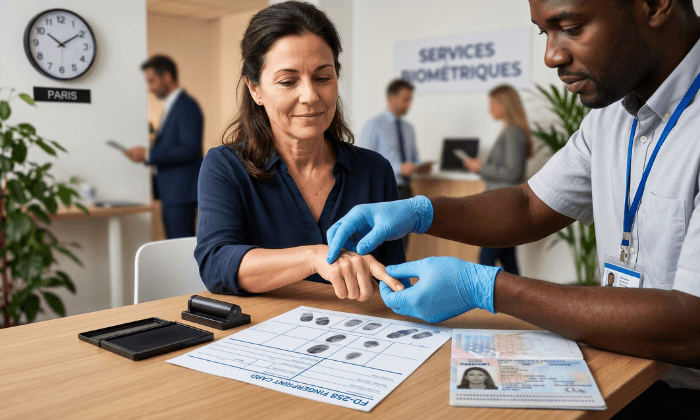
The Expat’s Guide to FD-258: How to Get FBI Prints While Living Abroad
Helpful Tools: We've integrated secure, interactive tools throughout this guide to streamline your process. Try them out as you scroll.
The Expat “Fast-Track” Summary
- The Problem: U.S. Embassies do not offer Live Scan. Physical mailing to the FBI takes weeks and risks loss in transit.
- The Solution: Get ink prints on an FD-258 card locally, then use Certifix Card Scanning to submit them digitally for 24-hour results.
- The “Pro” Move: Use our FBI Apostille Bundle to automate Department of State authentication.
Verified Content
This guide is fact-checked by our Certified Biometric Technicians and adheres to CFR 28 Part 16 federal standards for Identity History Summary Checks.
Why Getting an FBI Background Check is Harder Overseas
For U.S. citizens in Europe, Asia, or South America, the IdHSC is a mandatory hurdle for work permits and residency. However, U.S. Embassies generally do not provide fingerprinting for civil purposes.
Step-by-Step: How to Get FD-258 Prints Abroad
If you are living overseas, you must use the physical FD-258 Fingerprint Card.
1. Source the Correct Materials
Do not use local police forms. You must use the official FBI FD-258 card.
- Expert Tip: We recommend our FD-258 Card kit, which includes pre-inked pads and Appendix F cardstock.
2. Locate a Local Official
In most countries, the Local Police or a Registered Notary can capture your ink prints.
- Europe: Visit the Policía Nacional (Spain) or the Questura (Italy).
- Asia: Visit the local Prefecture or Public Security Bureau.
3. The “Print-to-Digital” Hack
Mailing a card from abroad to the FBI is slow. Instead, mail your card to our U.S. hub once. We scan it and submit it electronically to the FBI.
What if my prints are rejected while I’m overseas?
This is the #1 fear for expats. If your prints are “non-discernible,” the FBI will reject them.
- The Certifix Safety Net:
If you use our Card Scanning service and the FBI rejects it for quality reasons, we offer a discounted resubmission process. - How to prevent it:
Always capture two sets of cards. If the first card looks “light,” the second one might be the winner.
The “Apostille” Problem for International Visas
If you are applying for residency in a country that is a member of the Hague Convention (such as Spain or Portugal), a raw PDF is not sufficient. You need a Federal Apostille.
💡 Technician’s Corner: The “Tropical” Tip
If you are in a high-humidity environment (e.g., Italy, Mexico), wait 30 minutes for the ink to dry completely before placing the card in an envelope. Smearing caused by moisture is the leading cause of rejection of international submissions.
Don’t Let Your Visa Expire While Waiting for the Mail
Living abroad is stressful enough. Let the experts handle your biometrics and document authentication.
More Resources for Expats & Travelers
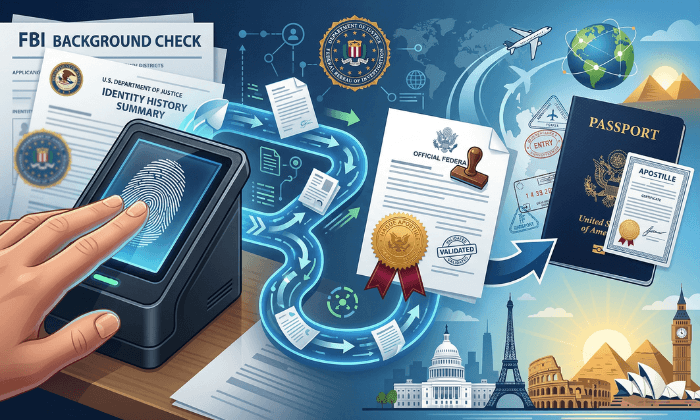
From Fingerprints to Foreign Affairs: Navigating the FBI Background Check & Apostille Pipeline
Master the complete timeline from submitting your FD-258 to securing your Federal Apostille from the Department of State.
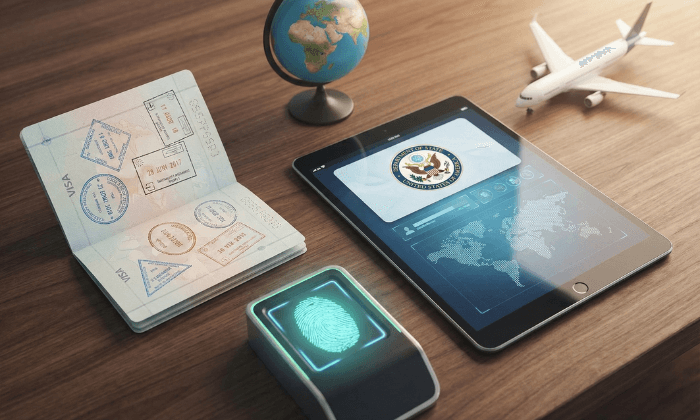
Obtaining an FBI Background Check for International Visas & Residency
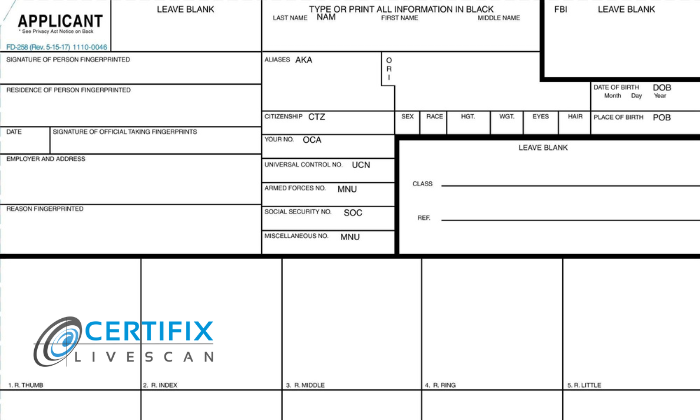
A Detailed Walkthrough of the FD-258 Fingerprint Card
Enjoy this article? Don't forget to share.
Frequently Asked Questions
-
Can I get fingerprinted at a U.S. Embassy?
Generally, no. Most embassies only provide biometrics for federal criminal cases or official government business.
-
Is a digital FBI report (PDF) valid for an Apostille?
Yes, but only if an Approved FBI Channeler handles it. The Department of State may reject a self-printed PDF.
-
Does the FBI accept "inkless" fingerprints?
Yes. Modern inkless pads (like the ones in our kits) are actually preferred because they produce sharper ridge detail for scanners.
-
How can I track my Apostille status from abroad?
When you use our Integrated Service, you get real-time dashboard updates so you aren’t left wondering where your documents are.
-
What is the ORI code for an FBI check?
For personal Identity History Summary Checks, the ORI is usually not required; you simply mark the purpose as “Personal Review” or “International Visa.”